Sums Application

School Management Solution for Schools, Colleges and coaching institutes.

Author name: Sums_Application_5511

Where Student Data Really Leaks: The Files Outside Your ERP
Uncategorized

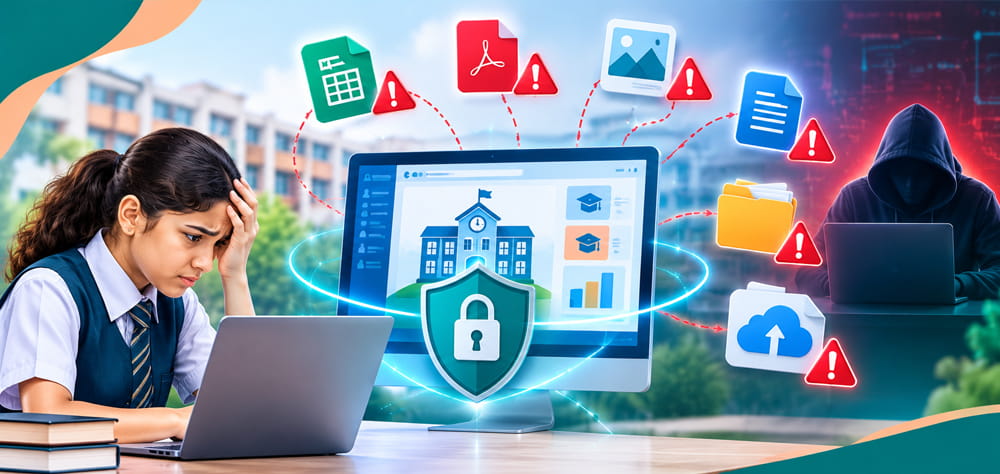
Where Student Data Really Leaks: The Files Outside Your ERP Our mission is to transform education by bringing together teachers, students, parents and management in one single platform. Most schools secure their main system and assume the job is done — but the real leaks happen in the files outside it. The Excel of every student’s details on a teacher’s personal laptop, the result PDF forwarded by email, the admission-documents folder synced to a free cloud account: once a file leaves your controlled system, you usually have no idea where it goes or who opens it. This article shows the everyday places student data actually escapes — and the simple way to keep the protection attached to the file itself. The blind spot: structured vs unstructured data The 6 everyday leak points Personal laptops, email, USB, free cloud sync, ex-staff devices, vendor sharing. Why your ERP can’t reach these files The fix: protection that travels with the file How Siccura Regula closes the gap FAQ Q: Where do most student data leaks happen? A: In unstructured files — spreadsheets, PDFs and photos — on staff laptops, email, USB drives and cloud folders outside the ERP. Q: Can an ERP stop file leaks? A: An ERP protects data inside it, but not loose files outside it — that needs file-level protection like Siccura Regula.
What Is Data Classification — and Why Every School Needs It

Uncategorized

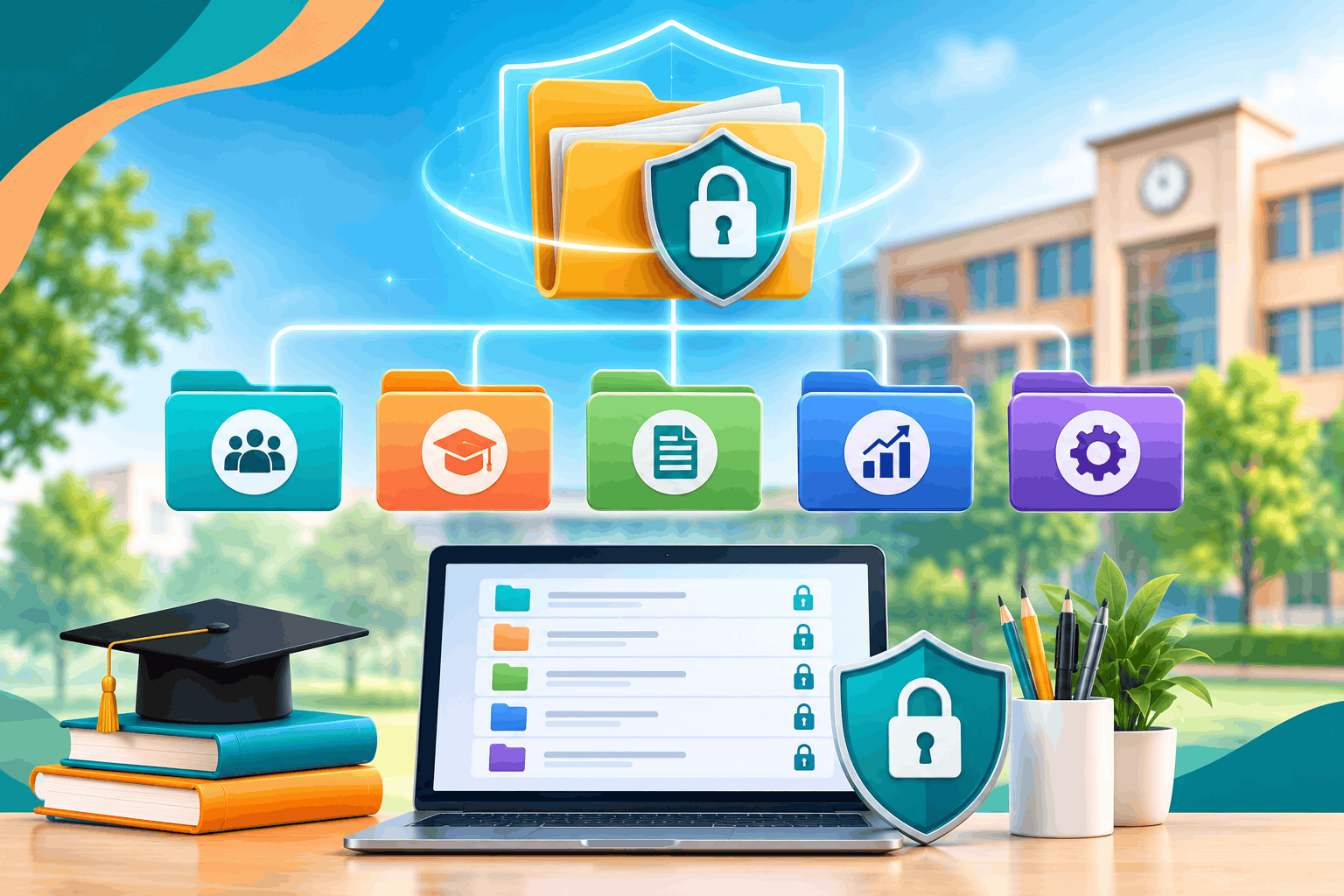
What Is Data Classification and Why Every School Needs It Our mission is to transform education by bringing together teachers, students, parents and management in one single platform. Data classification simply means sorting your files into a few clear categories — Public, Internal, Restricted and Confidential — so everyone knows which ones need protecting. For a school, it’s the first practical step toward keeping student data safe: once a mark-sheet or ID-scan folder is labelled Confidential, you can decide who opens it and how it’s shared. This article explains classification in plain language, why the DPDP Rules 2025 effectively expect it, and how to start without disrupting how staff work. What classification means The four simple labels Why DPDP makes it necessary How to start in a week Where Siccura Regula automates it FAQ Q: What is data classification? A: Sorting files into categories like Public, Internal, Restricted and Confidential so the right ones get protected. Q: Why do schools need data classification? A: It’s the first step to controlling who can access sensitive student files — a core DPDP expectation.

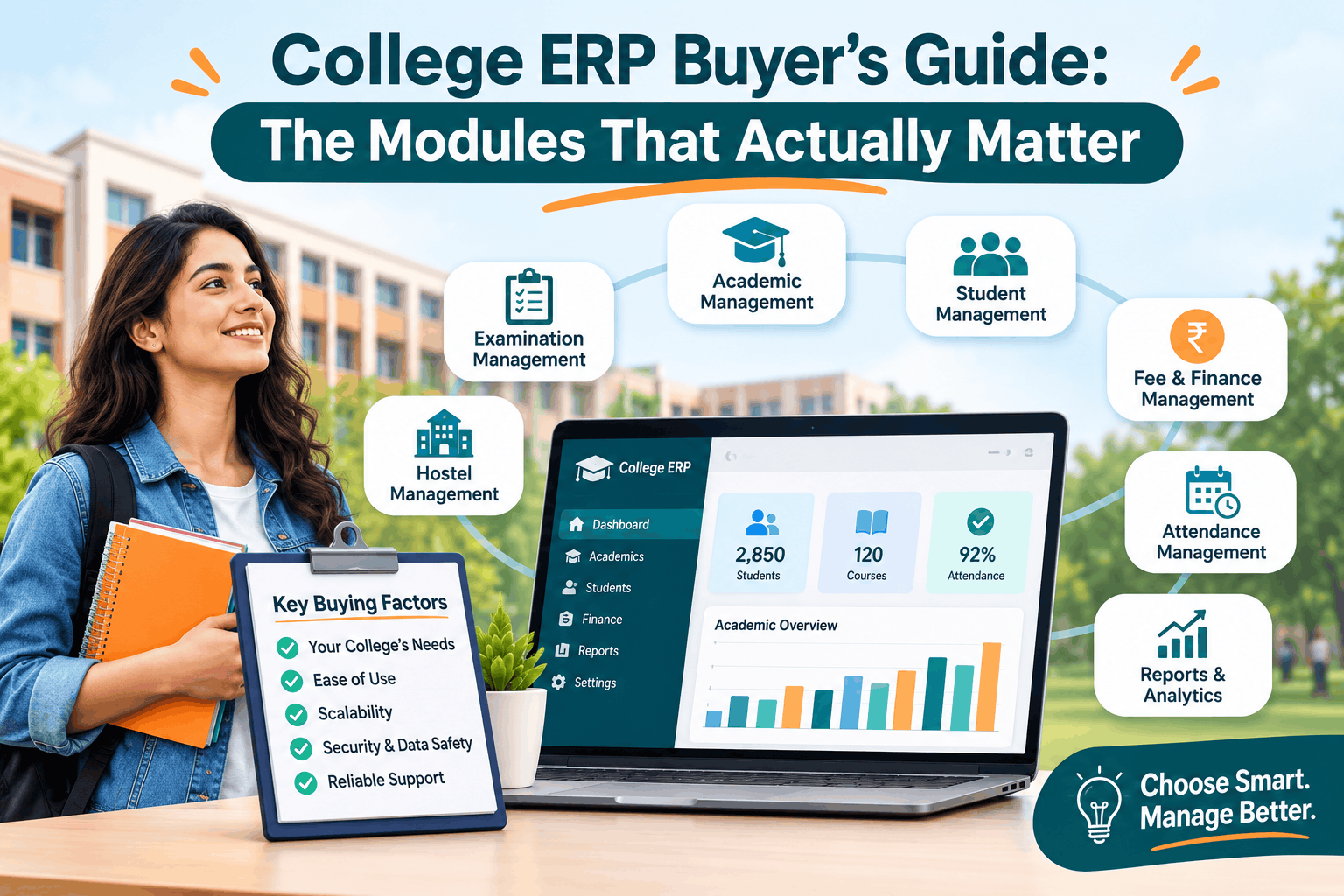
College ERP Buyer’s Guide: The Modules That Actually Matter

Uncategorized

From Registers to ERP: A Step-by-Step Migration Plan for Schools Our mission is to transform education by bringing together teachers, students, parents and management in one single platform. A college ERP has to do more than a school system: admissions and migration, multi-programme academics, examinations and results, scholarships and fee structures, hostel and transport, placements, and multi-campus governance — with DPDP-aligned data control across all of it. This guide cuts through feature lists to the modules that actually move the needle for colleges and universities, and the questions to ask before you buy. The modules that matter most in higher ed Examination & results engines Scholarships, fees & financial aid Multi-campus & role governance (and DPDP) Buyer questions + red flags FAQ Q: What modules should a college ERP have? A: Admissions, multi-programme academics, exams/results, fees and scholarships, hostel/transport, placements and role-based data governance. Q: How is a college ERP different from a school ERP? A: Greater complexity — multi-programme, exams, scholarships, placements and multi-campus governance.

How an Education ERP Makes You DPDP-Ready Faster

Uncategorized

How an Education ERP Makes You DPDP-Ready Faster Our mission is to transform education by bringing together teachers, students, parents and management in one single platform. An education ERP does a large part of DPDP’s technical heavy lifting for you. By centralising student and parent data in one access-controlled system, it replaces the open spreadsheets the law frowns on, captures verifiable consent at admission with a timestamp and audit log, gives parents a portal to exercise their rights, and produces the activity logs you need for breach detection and audits. This article maps each DPDP requirement to a concrete ERP capability — so you can see exactly how much faster compliance becomes. The DPDP-to-ERP capability map What the ERP does NOT cover Policies, training, loose files — honesty builds trust + sets up Siccura Regula. A realistic readiness timeline with an ERP How SUMS supports each step FAQ Q: Does an ERP make a school automatically DPDP compliant? A: No — it handles much of the technical side, but you still need policies, training and legal review. Q: What DPDP tasks does an ERP handle? A: Consent capture, access control, audit logs, parent-rights portal and breach-detection alerts.

What to Look For in Coaching Institute Management Software

Uncategorized

What to Look For in Coaching Institute Management Software Our mission is to transform education by bringing together teachers, students, parents and management in one single platform. Coaching institutes have different needs from schools: batch and slot management, flexible fee plans and instalments, lead and enquiry tracking, attendance across multiple centres, and parent communication — all without a heavy admin team. Since the DPDP Rules 2025, the software should also handle consent and access control so your marketing and data sharing stay legal. This guide covers the features that matter most for coaching, and how to evaluate them. Coaching-specific must-haves Batches, instalments, enquiry/lead tracking, multi-centre. Communication that stays consent-compliant Data control for a lean team Evaluation checklist FAQ Q: What features matter most for coaching software? A: Batch/slot management, flexible fees, enquiry tracking, multi-centre attendance and consent-compliant communication. Q: Can coaching software help with DPDP? A: Yes — by capturing purpose-specific consent and controlling who can access student data.

School ERP vs Spreadsheets: The Real Cost of Running on Excel

Uncategorized

School ERP vs Spreadsheets: The Real Cost of Running on Excel Our mission is to transform education by bringing together teachers, students, parents and management in one single platform. Excel feels free, but for a school it carries hidden costs: hours lost to manual entry and reconciliation, version chaos (‘which sheet is final?’), no access control, no audit trail — and, since the DPDP Rules 2025, real legal exposure when a spreadsheet of student data leaks. This article puts numbers to the true cost of running a school on spreadsheets and shows where an ERP pays for itself. The four hidden costs of spreadsheets Time, errors, no control, DPDP risk. The DPDP problem with the master Excel What an ERP replaces (with a before/after table) Calculating your payback FAQ Q: Is Excel a DPDP risk for schools? A: Yes — open spreadsheets of student data with no access control are a classic DPDP weak point. Q: When does a school outgrow spreadsheets? A: Once multiple staff share data, or once DPDP access-control and audit needs appear — usually well before schools realise.

How to Choose a School Management ERP in 2026 (Buyer’s Guide)

Uncategorized

Choosing a school ERP in 2026 comes down to five things: the modules you actually need (admissions, fees, academics, attendance, communication), how well it fits Indian school workflows, its data-security and DPDP posture, mobile access for parents, and total cost of ownership. With the DPDP Rules 2025 now in force, data protection has moved from ‘nice to have’ to a buying criterion. This guide gives you a practical checklist, the questions to ask every vendor, and the red flags to avoid. FAQ Q: What should a school ERP include in 2026? A: Admissions, fees, academics, attendance and communication — plus DPDP-aligned consent capture, access control and audit logs. Q: How much does a school ERP cost in India? A: It varies by student count and modules; ask for total cost of ownership including support and updates.

DPDP Data Retention & Erasure for Schools: How Long Can You Keep Old Records?

Uncategorized

Under the DPDP Rules 2025, personal data must be erased once the purpose it was collected for is no longer being served — for example when a student leaves and statutory retention has lapsed, or when consent is withdrawn. Schools can’t keep ex-students’ data forever ‘just in case’. This article explains the erasure principle, how to set sensible retention periods for different record types, and how to build a defensible retention schedule instead of hoarding data on old drives. FAQ Q: How long can a school keep student data? A: Only as long as the purpose is served (plus any statutory minimum); after that it should be erased.   Q: What triggers erasure under DPDP? A: Purpose fulfilled, consent withdrawn, or the retention period lapsing.

Sample DPDP Notice & Consent Form for Parents (Template + How to Use It)

Uncategorized

This is a ready-to-adapt parental notice and consent form aligned to the DPDP Act 2023 and DPDP Rules 2025. It states what data the school collects, the purposes, how parents can exercise their rights, and how to complain to the Data Protection Board — with separate, tickable consent boxes for academics, fees, photos and edtech sharing. Copy it, add your institute’s details, and you have a defensible, plain-language consent artifact for admission.   FAQ Q: What must a DPDP parental notice include? A: What data is collected, the purposes, parents’ rights, how to withdraw consent and how to complain to the Board.   Q: Does the notice need to be in a local language? A: Provide it in clear plain language and, where relevant, a Schedule-listed language the parent understands.

Can Schools Post Student Photos on WhatsApp Under the DPDP Act?

Uncategorized

Only with specific, verifiable parental consent for that purpose. Under the DPDP Act 2023, a student’s photograph is personal data, and posting it on WhatsApp parent groups, the school website or social media is a distinct use that needs its own consent — separate from the consent collected at admission. This article explains when sharing photos is allowed, when it isn’t, and how to set up a simple photo-consent system that keeps your event posts legal.   The short answer (yes, with specific consent).   Why ‘admission consent’ doesn’t cover photos.   When you must NOT post No consent, withdrawn consent, identifiable minors. A simple photo-consent workflow. FAQ Q: Can teachers share class photos on WhatsApp? A: Only with specific parental consent for sharing photos; general admission consent doesn’t cover it.   Q: What if one parent refuses photo consent? A: Don’t publish that child’s identifiable image; manage consent per student.

Scroll to Top